Slideshow

Friday, January 15, 2010

Ramen and Ichiban Boshi


Don't we all love Ramen guys? The juicy pork slices, boiled eyes and beautifully flavoured soup with fine textured thin noodle..mm..yum!!!
Now here is a little bit of history about Ramen...

Noodles originated from China over 4000 years ago and reached the Japanese culture much later on. In fact, we had to wait up to 19th century, in the Meiji period, for ramen to become widely known in Japan. After the Second World War came an intense food shortage in Japan, a turning point in the history of noodles. Ramen were perfect and greatly helped Japan, they were cheap and a great source of needed calories. A bit later, in 1958, Momofuku Ando, founder and chairman of Nissin Foods, invented the instant noodles, which are a lot closer to what we eat today. Named the greatest “made in Japan” invention of the 20th century, in front of the karaoke and headphone stereos, in a Japanese poll made by the The Fuji Research Institute Corporation, instant ramen became a Japanese cultural icon.

Although there are different types of ramen in almost every single Japanese restuarants in Sydney, I would really recommend Ichiban Boshi to go for delicious ramens and udons! The delicious Tokyo ramen is a great choice for value, a big bowl of flavour  for just $8.50!

Let's go for a Bento !!


So, any plans for the weekend? A BBQ? A picnic? Lame! Let's make ourselves Bento! Still don't know what it is? Well check this post!

Bento (弁当 or べんとう?) is a single-portion takeout or home-packed meal common in Japanese cuisine. A traditional bento consists of rice, fish or meat, and one or more pickled or cooked vegetables, usually in a box-shaped container. Containers range from disposable mass produced to hand crafted lacquerware. Although bento is readily available in many places throughout Japan, including convenience stores, bento shops (弁当屋, bentō-ya), train stations, and department stores, it is still common for Japanese homemakers to spend time and energy for their spouse, child, or themselves producing a carefully prepared lunch box.

Bento can be very elaborately arranged in a style called kyaraben. Contests are often held where bento arrangers compete for the most aesthetically pleasing arrangements. Kyaraben is typically decorated to look like people, animals, or characters and items such as flowers and plants.

There are so mant types of bento!

Shōkadō bentō (松花堂弁当) is a traditional black-lacquered Japanese bento box. It inspired IBM's (later sold to Lenovo) ThinkPad design.

Chūka bentō (中華弁当) are filled with Chinese food. While Chinese do have cold plates, it is more for appetizers or midnight "snack". The food that is associated with chuka bento was invented in Japan.

Kamameshi bentō (釜飯弁当) are sold at train stations in the Nagano prefecture. It is cooked and served in a clay pot. The pot is a souvenir item.

Makunouchi bentō (幕の内弁当) is a classic style of bento with rice, a pickled ume fruit (umeboshi), a slice of broiled salmon, a rolled egg, etc.

Noriben (海苔弁) is the simplest bento, with nori dipped in soy sauce covering cooked rice.

Sake bentō (鮭弁当) is a simple bento with a slice of broiled salmon (鮭, sake) as the main dish.

Shidashi bentō (仕出し弁当) is made in a restaurant and delivered during lunch. This bento is often eaten at a gathering like a funeral or a party. It is usually packed with traditional Japanese foods like tempura, rice and pickled vegetables. A shidashi bento packed with European-style food is also available.

Sushizume (鮨詰め) literally means "packed sushi", and is a bento filled with sushi.

Tori bento (鳥弁当) consists of pieces of chicken cooked in sauce served over rice. It is a popular bento in Gunma prefecture.

Hinomaru bento (日の丸弁当) is the name for a bento consisting of plain white rice with an umeboshi in the centre. The name was taken from the Hinomaru, the Japanese flag, which has a white background with a red circle in the centre. Pure Hinomaru bento only consists of rice and umeboshi to flavor rice without any other side dishes. The metal bento boxes, once popular in Japan, were often corroded by the acid of umeboshi, eventually making a hole in the middle of the lid.

OK, now I'm hungry again, gonna make a bento now! See you soon!

Make your own sushi!

Hi it's Wesley again!

Since we talked so much about the history, different types of sushi, wht don't we learn to make our own sushi? Yeah? Like this idea? Let's get started!!

So, in order to make a fine japanese sushi roll (or nigiri) you don't need to go through 5 years of fish cutting studies in Japan, neither you need anyone telling you that your first time ever sushi looks more like a sea cucumber in a rush hour out of the water. What you do need is some good will, and of course a good guide to help you through those rough times.

How to make sushi maki

1. "The rough side of the nori"
Feel the nori sheet from both sides and you will find one side to be a bit smooth and the other a little rough. The nori should lay on the rolling mat with the rough side facing upwards.

2."Getting busy with rice"
Get your hands wet, and make about a handful of rice to a ball of rice. It's important to keep your hands wet while working with sushi rice because it is sticky. When you work with the nori though, you should keep them as dry as you can. Keeping a bowl of water and a dry towel in your rolling zone is pretty necessary.

3. "The spread"
Gently put the rice ball in the middle of the nori sheet, and start spreading it equally on the nori, creating a layer of rice covering almost the entire sheet except the upper margin of about 2cm that should be kept uncovered. Later on, that margins are going to be needed empty of rice in order to close to sushi roll properly.

4."Can you fill this?"
Now it's time to place a slice of fish (preferably no more than one) on the edge of the nori, along with 1-3 pre-cut slices of vegetables (carrot, cucumber, green onion, asparagus, and so on.. allow yourself to get wild on this matter)..

5."Commence the rolling sequence"
Using the closer edge of the rolling mat, close on the filling with the nori making a rectangular shaped hill and tighten it from above.

6."continue the rolling sequence"
Move forward, continue rolling in the rectangular hill steps, keeping it tight with every move until you reach the end of the nori. Put pressure on the roll from all three sides at all time, especially on stops to allow it to roll tightly.

7."And....cut!"
Use a wet, sharp knife to cut the roll in to little sushi units. 6-8 units per roll - that's your call.

8."That's it"
Enjoy your japanese sushi roll.


Here's another useful clip for you guys!


Meiji Japanese Cafe!

By the strong recommendation of his working restaurant from our interviewee, Tony Wei, I did a research on this Meiji Japanese Cafe.

From others’ reviews, I found that Meiji Japanese Café is a lovely little Japanese Restaurant with delicious food and entertaining environment. There, you can experience the authentic Japanese culture and will be enchanted and delighted at the miso, wasabi peas and colourful tsukemono. As Tony mentioned in the interview, their “Kamameshi” is indeed the most popular and highly recommended. It is a traditional Japanese dish where rice is placed in an iron pot, covered with various meats and vegetables, and then steamed in a soup stock. Tony said their meats and vegetables are made in a special machine with secret recipe. While they also have more standard Japanese fare (bento, sushi, sashimi etc) you'd be crazy to walk out of this shop without trying the kamameshi. Quoting from others, “Meiji is a fantastic little Japanese shop, small and with an emphasis on traditional décor but light and airy. Friendly atmosphere, with service fast, courteous and efficient, and as with many of Melbourne's Japanese restaurants, the staff have a mysterious habit of speaking to each other in Cantonese.” Omg, I just can’t wait to visit Meiji Japanese Café!!!!!!


105 Little Bourke Street
Melbourne VIC 3000


Phone (03) 9662 2899

Interview with a experienced Chef specializing in Japanese cuisine

Tony, a qualified western-style food chef yet working in a typical Japanese restaurant for years. From the interview, Tony introduced a branch of knowledge of Japanese food relating to the Japanese culture.

As he said, there are three popular types of Japanese knive which are used in differet ways. They are usuba, the deba and the yanagiba. Essentially, Usuba is used for cutting vegetables while deba and yanagiba are both used for fish. The Japanese knives are not designed to cut, but make food tatier. For example, if the Japanese steel knife has spots of rusts and you keep using them, the steel taste is transferred to the food, while ceramic and stainless steel prevent that.

He also explained what a "kappo" restaurant is.
"The word Kappo is shortened form of katsu shu ho ju. It means “cut first, then simmer”, stressing the belief that the beauty of cooking starts from cutting. When people say Kappo restaurant, it means the place where a chef cuts or cooks food in front of you. For example, if you order sashimi, a chef will cut the slices from a prepared fillet in front of you. If you order tempura, they will deep-fry the food in front of you. A Kappo restaurant often has an open kitchen, and it is enjoyable to watch what the chef is doing. There may be some tables in a Kappo restaurant, but you would like to seat yourself at the counter to watch how your food is prepared. There’s the difference from a Kaiseki or Ryotei restaurant. A Kaiseki ryotei takes a great deal of care with their service, highly trained waiters and waitresses, in a beautiful tatami mat room with a zen-like garden. Their food is elaborate for special occasions. "

He believes that understanding people and culture leads others to understand cuisine even more deeply. When I asked him how Western cuisine is different to Japanese cuisine, he told me that Japanese food has been regarded as the healthiest food in the world as the basic Japanese dishes are made of cruciferous vegetables and seafood. You have to pay much more attention on practicing your cutting skills.

By the end, he recommended us some special dishes of Meiji Japanese Cafe, where he is currently working at. Despite those traditional Jap- dishes such as sashimi, sushi, tempera and soup noodles, their KAMAMESHI is the most popular dish. It is Japanese traditional pot rice, cooked with meats, vegetables in a special machine with secret recipe. We can only have KAMAMESHI in their café in Australia.

I'm looking forward to have a taste of that KAMAMESHI, who wanna go to Melbourne with me?

What is your favorite type of sushi?


Hey! Do you know how many kind of sushi are there? Which is your favorite type? Well, if you still not sure, keep reading this post!

The common ingredient across all the different kinds of sushi is sushi rice. The variety in sushi arises from the different fillings and toppings, condiments, and the way these ingredients are put together. The same ingredients may be assembled in a traditional or a contemporary way, creating a very different final result. In spelling sushi its first letter s is replaced with z when a prefix is attached, as in nigirizushi, due to consonant mutation called rendaku in Japanese.


Nigirizushi


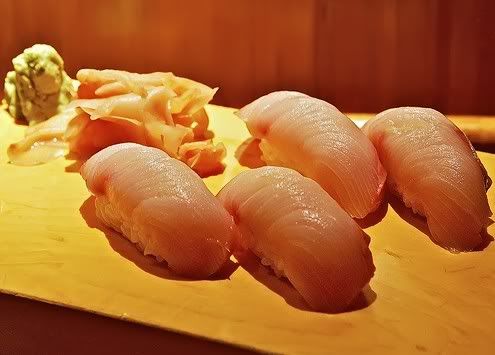
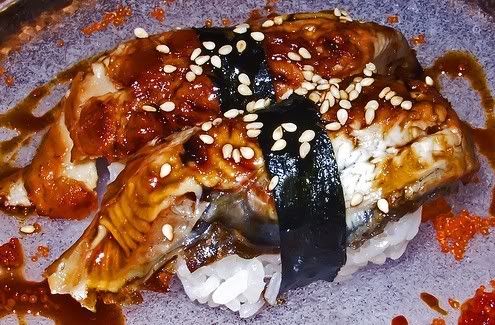
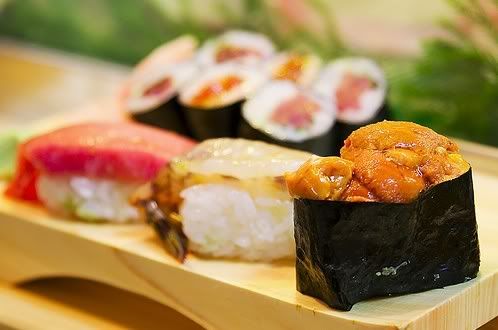
Nigirizushi (握り寿司, lit. hand-formed sushi) consists of an oblong mound of sushi rice that is pressed between the palms of the hands, usually with a bit of wasabi, and a topping draped over it. Toppings are typically fish such as salmon, tuna or other seafood. Certain toppings are typically bound to the rice with a thin strip of nori, most commonly tako (octopus), unagi (freshwater eel), anago (sea eel), ika (squid), and tamago (sweet egg). When ordered separately, nigiri is generally served in pairs. A sushi set may contain only one piece of each topping.

Gunkanmaki (軍艦巻, lit. warship roll) is a special type of nigirizushi: an oval, hand-formed clump of sushi rice that has a strip of "nori" wrapped around its perimeter to form a vessel that is filled with some soft, loose or fine-chopped ingredient that requires the confinement of nori such as roe, natto, oysters, sea urchin, corn with mayonnaise, and quail eggs.Gunkan-maki was invented at the Ginza Kyubey restaurant in 1931; its invention significantly expanded the repertoire of soft toppings used in sushi.

Temarizushi (手まり寿司, lit. ball sushi) is a ball-shaped sushi made by pressing rice and fish into a ball-shaped form by hand using a plastic wrap. They are quite easy to make and thus a good starting point for beginners.


Makizushi or Makimono

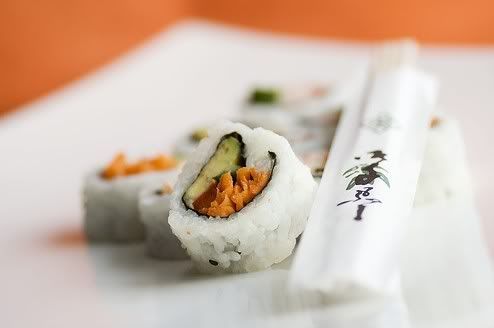
Inari-zushiMakizushi (巻寿司, lit. rolled sushi) or makimono (巻物, lit. variety of rolls) is cylindrical piece, formed with the help of a bamboo mat, called a makisu (巻簾). Makizushi is generally wrapped in nori, but can occasionally be found wrapped in a thin omelette, soy paper, cucumber, or parsley. Makizushi is usually cut into six or eight pieces, which constitutes a single roll order. Below are some common types of makizushi, but many other kinds exist.

Also, there are Futomaki (太巻, lit. thick, large or fat rolls, a large cylindrical piece, with nori on the outside) Hosomaki (細巻, lit. thin rolls, a small cylindrical piece, with the nori on the outside) Temaki (手巻, lit. hand rolls, a large cone-shaped piece of nori on the outside and the ingredients spilling out the wide end) and Uramaki (裏巻, lit. inside-out rolls, a medium-sized cylindrical piece, with two or more fillings).


Others

Oshizushi (押し寿司, lit. pressed sushi), is a pressed sushi from the Kansai Region, a favourite and specialty of Osaka. Inari-zushi (稲荷寿司, stuffed sushi) is a pouch of fried tofu filled with usually just sushi rice. Sukeroku (助六, name of a man in Edo period) is the combination set of inarizushi and makizushi, which is served as a single-portion takeout style sushi-pack. Nama-chirashi, or chirashizushi with raw ingredientsChirashizushi (ちらし寿司, lit. scattered sushi) is a bowl of sushi rice with other ingredients mixed in (also refers to barazushi). Narezushi (熟れ寿司, lit. matured sushi) is a traditional form of fermented sushi. Skinned and gutted fish are stuffed with salt, placed in a wooden barrel, doused with salt again, then weighed down with a heavy tsukemonoishi (pickling stone). As days pass, water seeps out and is removed. After six months this funazushi can be eaten, remaining edible for another six months or more.


The History of SUSHI !!


Hi there! Long time no blog! Today I was thinking having sushi for my lunch, and this idea just popped up in my head, where does sushi come from? Who made the first sushi ever? Well, then I did some resaerch on the internet, and hope these information I shared can help everyone know a little bit more about the history of sushi.

Sushi (寿司, 鮨, or 鮓) is vinegar rice, topped with other ingredients, such as fish. Sliced raw fish alone is called sashimi, as distinct from sushi. Sushi served rolled inside or around dried and pressed layer sheets of seaweed (or nori) is makizushi (巻き). Toppings stuffed into a small pouch of fried tofu is inarizushi. Toppings served scattered over a bowl of sushi rice is called chirashi-zushi (ちらし).

The original type of sushi, classified today as nare-sushi, first developed somewhere in Southeast Asia, disseminating to Japan. Fish was salted and wrapped in fermented rice, a traditional lacto-fermented rice dish. Nare-sushi was made of this gutted fish stored in fermented rice for preservation. Nare-sushi was stored for fermentation for a few months then removed. The fermented rice was discarded and fish was the only part consumed. This early sushi became a great source of protein.
The Japanese preferred to eat the fish with the rice, called seisei-sushi. During the Muromachi period seisei-sushi was the most popular type of sushi. Seisei-sushi was partly raw fish wrapped in rice, consumed fresh, before it lost its flavor. This new way of consuming fish was no longer a form of preservation but rather a new dish in Japanese cuisine.

During the Edo era (the early modern period, 1603 to 1868 in Japan), a third type of sushi was introduced, haya-sushi. Haya-sushi was assembled so that both rice and fish could be consumed at the same time, and the dish became unique to the Japanese culture. It was the first time that rice was not being used for fermentation. Rice was now mixed with vinegar. Fish, vegetables and dried preserved foods would be added. This type of sushi is still very popular today. Each region utilizes local flavors to produce a variety of sushi that has been passed down for many generations.

When Tokyo was still being called Edo, at the beginning of the 19th century, mobile food stalls became the dominant food service. During this period nigiri-sushi was introduced. Nigiri-sushi is the most common type of sushi in the modern sushi restaurants. It is an oblong mound of rice with a slice of fish draped over it. After the Great Kanto earthquake in 1923, nigiri-sushi chefs lost their jobs and spread throughout Japan and popularised the dish throughout the country.

Today the sushi dish is internationally known as "sushi" (nigirizushi; Kantō variety) is a fast food invented by Hanaya Yohei (華屋与兵衛; 1799 - 1858) at the end of Edo period in today's Tokyo (Edo). People in Tokyo were living in haste even a hundred years ago. The nigirizushi invented by Hanaya was not fermented and could be eaten using the fingers or chopsticks. It was an early form of fast food that could be eaten at a road side or in the theater.


OK! Time to have sushi now!

Thursday, January 7, 2010

The Beauty of Japanese Hot Pot

The Japanese have long believed that sharing a meal from a single pot forges closer relationships. Japan's beloved comfort food, hot pots, are a well-balanced and naturally nutritious bounty of vegetables, tofu, chicken, seafood, or meat, all infused with lip-smacking Japanese flavors. So gather your friends and family round the dinner table for these easy, economical, homey dishes that require minimal fuss and no special equipment — just a good appetite ^^
This is what the New York Times says about Japanese hot pots, "Steaming bowls sustain body and soul in the cold months. Your grandmother probably knew how to fill this need and the Japanese certainly do..."
There are many different types of Japanese hot pots including shabu shabu, nabe and sukiyaki which includes different soup base and meat or seafood. Most hot pot would include thinly sliced beef or fish, and they are just delicious when you swish it in soup gently for a few second and dip them in sauce! Ofcause, the essential element of the Japanese hot pots are the fresh and healthy vegetables. Chinese cabbage, tofu and different types of mushrooms are a must as they are tasty and bring more flavours to the soup base.
In Sydney, there are a lot of restaurants which has the Japanese hot pot on their menu. However, i would really recommend Nakashima on the Rocks, to those who wants the traditional style of the great taste.


Kura 藏


I actually visit this restaurant regularly and again and again I have been very satisfied with my choice.

I can't really describe it, but the most I can say about the food is that it's good. It doesn't and never really ever goes beyond that. I mean to say that at the end of the day it's just ramen. It doesn't have a distinctive flavour like pho or a unique characteristic like ramyun, in the end it's just noodle soup. The soup never quite makes you drool and the noodles are good but the texture doesn't exactly excite me, the meat is tender and the tempura can never be called special.
Yet the fusion of these average ingredients will create the most magical experience. Something so simple will amaze you. Ultimately though, it's just ramen it's extremely satisfying. I'd recommend the Ultimate as it's got a little bit of everything.
I've also had the seared salmon sushi. Very nice. Smokey, as it's intended, combined with the light tanginess of the lemon it creates a wonderful taste in you mouth. It is quite cheaper than it's competitors but unlike the ramen, though slightly, I've had better. The chicken don, as shown in the picture is one of my favourite dish in Kura, the nicely cooked egg and tendor chicken covers the rice which is soaked slightly in teriyaki sauce.
If I think about Kura, it's always the warm memory of the small corner restaurant, bringing shelter on a rainy day. I feel welcomed in it's small room filled with people happily devouring their meals. If you're ever eating here, stop for a moment, take a breath and look around, there won't be a displeased person in sight.

Here is the map to help you find Kura easily.
Remember to tell us what you think about Kura and recommend other nice dishes there, as we are always in search for new yummy dishs!


Izakaya Kasumi

My friends have raved about this place and I finally got to try it for dinner on Saturday night. Luckily we booked as it was busy but the food came out really quickly. Basically all our dishes came out at once which is good if you're really hungry, but not good if you want to relax and catch up with friends.
Still the service was very friendly and the higlight dishes were the okonomiyaki, chicken karage, sushi and sashimi platter. Love the sunken boothes and I'll definitely be back!!


Japanese women don't get old or fat!?!?

I was surfing the net about few weeks ago and just happen to come across this really interesting book called "Japanese Women Don't Get Old or Fat: Secrets of My Mother's Tokyo Kitchen", written by Naomi Moriyama, a girl who grew up in Tokyo, Japan. When I first read the title, I laughed. It seemed like a quite obvious attempt to cash in on the success of "French Women Don't Get Fat: The Secret of Eating For Pleasure". So, i decided to get the book to read.
The diet and weight loss points made in this book could be summed up in a few bullet points:


Don't overeat - observe the hara hachibunme rule (eat until you are 80% full)
Eat a lot of fresh vegetables.
Eat a wide variety of foods.
Eat more whole grains - eat brown rice rather than polished white rice.
Eat fruit for dessert, or small portions if you must have cake etc.


Obviously, it is not necessary to eat Japanese food to accomplish these goals. But I do agree with the point made in this book that traditional Japanese food is inherently healthy. According to the book, traditional Japanese food centers around rice (gohan, which is also a synonym for a meal), with small portions of okazu, savory things that go well with the plain rice. A typical Japanese dinner would have, besides the rice, 1 small bowl of soup (miso or clear), 1 protein dish such as grilled fish, and 2 or 3 other mostly vegetable-based side dishes. A popular dietary guide in Japan that has been around for decades is to try to eat 30 kinds of food items a day for nutrional well-roundedness. This may sound impossible, but in Japanese cooking it's not that out of reach.

Interview with nutritionist, Edward Yuwono

In order to prove the many benefits of the Japanese diet, I have decided to conduct an interview with a nutritionist I knew. Please go to our playlist to listen to the full version of the interview on G-cast. Edward Yuwono is a qualified nutritionist who is currently employed by Nature's Own, a well known vitamins and supplement company. He deals with customers daily to informing customers about the company's products and helping them with choosing the most appropriate supplements to take as well as aiding them with their daily dietary routines. 
Mr Yuwono's views in this interview can be summed up in these points:


  • He rates the quality of the average Australian diet as only a 4/10 as he recognised an increasing amount of consumers face their problems due to an increase in energy intake, along with an increase in sedentary lifestyle. This is because consumers are fed ready available energy at a low cost price, as we know the takeaway and junk foods, which are high in saturated fat and high carbohydrate levels, and rarely include the amount of nutrition and vegetable intake we need. 
  • Health issues in Australia in relation to unhealthy diets and eating habits includes short, medium, and long term problems such as obesity, diabetes, liver problems, osteoarthritis, reproductive problems and cancer formations. 
  • There have been enormous amounts of articles and commotion about how the Japanese diet is a prime example of a healthy, nutritional diet. The Japanese diet has been known for centuries as maybe one of the healthiest diet in the world due to its high levels of nutrients and antioxidants. The life expectancy of Japanese people is known as the highest in the world, and obesity has only recently become an issue with the infiltration of western fast foods. 
  • The Japanese consume about five times the amount of cruciferous vegetables as the average westerner in their daily meals, the Japanese diet is fish based which helps to reduce heart disease, lower cholesterol, and improve brain function. The Japanese eats a lot of tofu in their meals, which is a good source of protein and is packed with nutrients necessary for good health. One other essential part of the Japanese diet would be green tea which has been linked with a reduced risk of cancer in both men and women. Green tea consumption is linked with a reduced risk of stroke and heart disease.
  • Most Japanese dishes are cooked in little or no fat and salt, which are the main causes for all health related diseases. 
  • “eating with your eyes”. This is where consumers eat slower as they are attracted to the food that they eat. Japanese food is always nicely presented so that people eat slower, which makes them feel full faster.

Now, even the professional has proved how healthy the Japanese diet is, not to mention he is also a big fan of Japanese food himself, what are you guys waiting for? Let's eat the "Japanese way"!!

Tuesday, December 29, 2009

This is why the Japanese live longer in average!!

The traditional Japanese diet is said to be one of the healthiest in the world. Have you ever wondered: well, is Japanese food really that healthy? If so, why? And just what do they eat anyway?

According to UK Daily Mail in 2002, “96% fewer men suffer coronary heart disease in Japan than in Britain” AND
“Only six in 100,000 Japanese women contract breast cancer - 20 times fewer than in Britain”
The two most common causes for health problems in relation to obesity and heart diseases are animal fat and sugar.
The traditional Japanese diet does not include meat (or at least ‘red’ meat), except in rare examples and those dishes are considered as foreign dishes anyway.
Traditional Japanese meals include alot of fresh vegetable, tofu, and fish, either raw or cooked in very little fat. Small portions of rice or noodle is consumed 3 meals a day.
The magic of Japan-style eating is a healthier balance of filling, delicious low calorie foods and the beautifully displayed dishes. In other words, you are also "eating with your eyes", which results in the cutting down of the speed and quantity of food consumed.

MUSASHI Japanese dining bar


MUSASHI is a a popular Japanese dining place near Central station. It is well known for it's great range of delicious foods and drinks, and also for the incredible number of customers lining up outside almost everyday. So, here are the reasons why they, (and myself) love Musashi;


The menu include all of the Japanese dishes you can think of, such as a variety of teppanyaki, sushi, sashimi, noodle and original Japanese drinks. The mains are $15 - $25 and I would strongly recommend the set meals as they are just great value for great tasting food. All cooked meat meals comes with salad, miso and rice. The sushi and sashimi deluxe set is $22 which includes miso soup, udon, salad, carlifornia rolls, eels and a choice of sashimi and sushi rolls is definitely worth to try!

The foods always comes quickly, waiters are always friendly and helpful and the environment is relaxing and clean. Not to mention there is also a nice outdoor dining area.
Visit Musashi and tell us what you think!

More information on Musashi:
Address: 447 Pitt Street, Sydney 2000 (Near Capital Square, 3min walk from Central station)
Here is a MAP to help you.
Phone: 92800377
Fully liscenced
***Testament to the retaurant's popularity, booking are only taken 11:45am-12:15pm, and 5:30-6:15pm.
Opening hours: 5:30pm-10:00pm Mon-Sun
Lunch:11:40am-2:30pm Mon-Fri
***It is always better to go dinner at 9:00pm as the peak hour has passed, last order is about 10:00pm, closing at about11:00.

Friday, December 18, 2009

SUMINOYA Japanese BBQ restaurant

Hello everyone, this is Ying~~~ 
Lets dig into some of the most finest Japanese dining restaurants around and here's one of my favorite Japanese BBQ restaurant, SUMINOYA ! 
The first time I went to the place, I was a bit shocked by the price. However, within a few minutes, I was really impressed with the large range of meat, seafood and sashimi to choose from. It is a BBQ buffet restaurant with 2 price choices, Gourmet Buffet: $41 and Premium Buffet is $7 extra . Order the Gourmet Buffet and you've pretty much get most of the dishes on the menu. 
The service is friendly and fast, and food quality is excellent. However, the communication can sometimes be a barrier (all of them are non-native english speakers). Just point at the pictures on the menu ^.^

My personal favorites are the beef tongue, garlic prawns, corn butter and yuke raw beef. The green tea ice cream and coffee jelly for desert are also a must. To those of you who don't like the smoke, it IS a BBQ restaurant, so just enjoy the food and bring your change of clothe if you are going out afterwards. 

Here is more information on the restaurant:
Lunch: 12:00pm-3:00/ Mon-Fri
Dinner: 6:00pm-10:30pm/ 7days
Fully Licensed
Phone: (02) 92312177
***Just an advice on booking, remember to book atleast 1 day in advance because it is VERY busy!
Adress: 1 Hosking Place, Sydney, NSW
Is is in a small street on the way to Circular Quay from Martin Place. It might be a bit hard to find the first time, but here's the MAP to help you.

Sushi Train @ Bondi Junction

I still remember the first time I went to Sushi Train Bondi Junction was two years ago. The massive queue out the front attracted me. Curiously, I decided to spend some time to have a taste of its food. I spent ten minutes waiting in the long queue and I found the reason--- food is fresh and delicious; service is efficient and friendly; fun ambience as the unique decorations and the yelling chefs. The restaurant is a little pricier than the average sushi trains, however, the quality of the food is definitely worth it.


The range of dishes is fantastic. My personal favorites are the grilled eel, scallop and the wagyu beef sushi, but everything I've had has been great. It reliably delivers fresh sushi treats that are paraded right before your eyes on a conveyer belt, like a moving smorgasbord. If you're not full enough from California rolls or miso soup, Sushi Train also offers desserts including green tea mousse, tiramisu and jelly.
Various Dishes


Crunchy Roll


Grilled Salmon


Grilled Scallop


Miso Soup


Prawn with Special Sauce


Tuna & Avocado


Sushi train is sure enough one of the best sushi restaurants in Sydney I have ever tasted. Till now, even though there were more than 3 Japanese sushi restaurants opened in the same street, I’d rather spend ten or more minutes waiting to be seated outside of this immensely popular sushi joint in Oxford Street Mall. Sushi Train, probably one of the biggest sushi trains that I have been to, spacious yet still can't fit in the people who are waiting. That says something!


  • Address: Shop 4 183-193 Oxford St Bondi Junction 2022 NSW

  • Phone: (02) 9387 3774

Friday, December 11, 2009

How to use chopsticks (筷子)

So, after a brief introduction of Japanese cuisine history, you might find it the chopsticks plays an important role in asian food culture. It is always interesting to watch people using chopsticks for the first time, so if you are not familiar with using chopsticks, get yourself prepared so your friends won't laugh at you!


_____________________

Chopsticks originated in ancient China as early as the Shang dynasty (1766-1122 BC). The earliest evidence of a pair of chopsticks made out of bronze was excavated from Yin Ruins's Tomb 1005 at Houjiazhuang, Anyang, Henan, dated roughly 1200 BC.


There are several styles of chopsticks that vary in respect to:
  • Length: Very long chopsticks, usually about 30 or 40 centimeters, tend to be used for cooking, especially for deep frying foods. In Japan they are called saibashi (菜箸). Shorter chopsticks are generally used as eating utensils but are also used for cooking.
  • Tapering: The end of the chopsticks for picking up food are tapered to a blunt or a pointed end. Blunt end chopsticks provide more surface area for holding food and for pushing rice into the mouth. Pointed chopsticks allow for easier manipulation of food and for picking out bones from cooked fish. Pointed ends are also helpful in spearing the food, if the proper technique cannot be mastered. Spearing is seen, however, as improper etiquette.
  • Material: Chopsticks are made from a variety of materials: bamboo, plastic, wood, bone, metal, jade, and ivory.
    • Bamboo and wood chopsticks are cheap, low in temperature conduction and provide good grip for holding food due to their matte surfaces. They can warp and deteriorate with continued use. Almost all cooking and disposable chopsticks are made of bamboo or wood. Disposable unlacquered chopsticks are used especially in restaurants. These often come as a piece of wood that is partially cut and must be split into two chopsticks by the user (demonstrating that they have not been previously used). In Japanese, these are known as waribashi (割り箸). Natural wood chopsticks, like natural wood food preparation surfaces, have an innate antibacterial property absent from other materials.
    • Plastic chopsticks are cheap, low in temperature conduction and are resistant to wear. Due to their composition, plastic chopsticks are not as effective as wood and bamboo chopsticks for picking up food as they tend to be slippery. Also, plastic chopsticks cannot be used for cooking since high temperatures may damage the chopsticks and produce toxic compounds.
    • Metal chopsticks are durable and easy to clean. They tend to be more expensive.
    • Materials such as ivory, jade, gold, and silver are typically chosen for luxury.
  • Embellishments: Wooden or bamboo chopsticks can be painted or lacquered to decorate them and make them waterproof. Metal chopsticks are sometimes roughened or scribed on the tapered end to make them less slippery when picking up foods. Higher priced metal chopstick pairs are sometimes connected by a short chain at the untapered end to prevent their separation.

Enjoy you meal!

Japanese-style Rice Dishes

Hello everyone, today Nicole is going to introduce various kinds of Japanese rice dishes~

Firstly, i'd like to recommend a brand of raw Japanese sushi rice--- SunRice Japaneses Style Sushi Rice. As a sushi lover, I have to say that, rice choosing is the most basic yet important thing that you have to pay much attention on it.


SunRice Japanese Style Sushi Rice is a soft and tender short grain rice ideally steamed to accompany Japanese meals. When cooked it is clingy enough to be eaten with chopsticks. It is perfect for sushi, and is also great for rice desserts. Often mistakenly referred to as "sticky rice" which is not true. Sticky rice is a glutinous rice used mainly for desserts. For best results, rinse 3-4 times before cooking and do not cook with salt, to preserve the delicate flavour. SunRice Japanese Style Sushi Rice is available in 750g packs and you can find it in any Japanese/ Chinese/ Korean convenient supermarkets.
______________________________________________

NOW, here are some SPECIAL Japanese dishes based on rice.. I know you will love them! ^o^

______________________________________________


  • Japanese-style plain Rice


Properly cooked rice is the foundation of a traditional Japanese meal, and you absolutely cannot skimp on the steps detailed here if you are aiming for anything approaching authenticity.

Rice is the staple of Japanese food, and making it just right can be rather difficult if you don't know how. If you think you will be preparing rice regularly, an electric rice cooker will make your life so much easier.

Japanese rice is a very particular variety. For traditional Japanese dishes you simply cannot substitute long-grain rice, jasmine rice, basmati rice, Carolina type rice, and so on. I sometimes hear people saying things like "But I can make onigiri with jasmine rice just fine, as long as I cook it so it's mushy and the grains stick together". No no no no no. A good onigiri, a good sushi roll, a good nigiri-zushi, and most of all a good bowl of rice does not have mushy rice.

Ideally, the rice should be quite fresh. The best rice is new rice called shinmai, purchased within 3 months of harvest. Unfortunately, it's just about impossible to buy rice that fresh outside of Japan. Just buy the best rice you can afford, such as the SunRice Japaneses Style Sushi Rice. Once you learn how to make rice properly, you will really taste the difference between different kinds of rice.

Some popular 'first grade' Japanese rice varieties include Sasanishiki, Koshihikari andAkita Komachi. They tend to be expensive.

______________________________________________


  • Smoked Salmon Temari Zushi

This is another type of sushi which is great for parties. Temari are small cloth balls made from leftover scraps of kimono fabric, and temari zushi are meant to look like these colorful toys. You can make temari zushi with any number of things, such as thinly sliced sashimi grade fish, boiled and butterflied shrimp, thinly sliced and cooked or uncooked vegetables, and even thin slices of cheese. It is made by thinly cut slices of pale pink smoked salmon and tiny amount of cream cheese inside. It seems quite non-traditional but it’s a great combination. The key is to make the temari zushi on the small side since they are quite rich.
As with the hamaguri-zushi, these don’t require any soy sauce for dipping.


_____________________________________________


  • Shell-shaped sushi (Hamaguri-zushi)


As be shown, the first is hamaguri-zushi or clam sushi is supposed to look like a clam, but to me it looks just as much like a little yellow flower. It can be filled with any kind of sushi rice and, with lemony smoked salmon, mitsuba or flat-leaf parsley and white sesame seeds, wrapping in a usuyaki tamago or thin omelette. It’s related to chakin-zushi, where the omelette is wrapped in a bag shape and tied, but slightly less fiddly since all you have to do is fold it into quarters.
Besides making a very pretty spring party dish (for an appetizer maybe, or as part of a buffet), these work very well as bento items too since the sushi rice has good keeping qualities, and the omelette keeps the rice from drying out. Plus you can just grab them with your hands to eat.


______________________________________________


  • Kurama Mixed Rice
Kurama Mixed Rice is an amazing Japanese rice dish mixed with soy sauce-infused chirimen jako (dried, salted, tiny fish, a fantastic ingredient we'll get to in a minute) and sansho (intensely aromatic, seductive accent, ditto about getting into in a minute). In addition, chirimen jako are tiny young sardines or anchovies that have been boiled then salted and dried, thus naturally preserved. You reconstitute them with boiling water and add to an omelet or quickly deep fry and sprinkle over salad or, well, rice.


______________________________________________

  • Chestnut Rice


Chestnut rice is another incredible Japanese style rice with a play of delicate flavors. You steam the chestnuts with rice, brings out their natural sweetness in a much more subtle. The rice is a mixture of Japanese short grain rice and sticky (glutinous or sweet) rice, which creates a delightful texture and infuses even more of that natural sweetness. Finally, the sake and the salt here nicely pop all these tastes. The complexity of flavor you find in this simple dish is just amazing.


YOU HAVE TO TRY THEM!!!

In addition, both Kurama Mixed Rice and Chestnut Rice are selected from the blog The Japanese Food Report, it introduces lots of delicious Japanese special dishes and provides recipes, come and vist it!!






The History of Japanese Cuisine (日本料理)


Hi there! It's me Wesley again! So today I would like to introduce you the history of Japanese food. Since there are so many Japanese restaurants in Sydney nowadays and most people are really familiar with sushi and tempra, I think wouldn't it be nice that we start with the traditional style of Japanese food? So let's begin with the history of national cuisine, shall we?


Japanese cuisine has developed over the centuries as a result of many political and social changes. Back to the ancient era of Japanese history, the cultivation of rice was introduced from China. Rice was commonly boiled plain and called gohan or meshi, and, as cooked rice has since always been the preferred staple of the meal, the terms are used as synonyms for the word "meal." And also with the use of chopstick.  


File:Chopstick.JPG


Chopsticks, at first were used by nobility at banquets; they were not used as everyday utensils however, as hands were still commonly used with which to eat. Metal spoons were also used during the 8th-9th century, but only by the nobility. ining tables were also introduced to Japan at this time. Commoners used a legless table called a oshiki, while nobility used a lacquered table with legs called a zen. Each person used his own table. Lavish banquets for the nobility would have multiple tables for each individual based upon the number of dishes presented. Upon the decline of the Tang dynasty in the ninth century, Japan made a move toward its individuality in culture and cuisine. The abandonment of the spoon as a dining utensil is one of the marked differences, and commoners were now eating with chopsticks as well. Trade continued with China and Korea, but influence en masse from outside of Japan would not be seen again until the 19th century.


Japanese food is also influenced by some political reasons. For example, during the Kamakura period, the cuisine of the samurai came distinctly from their peasant roots. The meals prepared emphasized simplicity while being substantial. Specifically the cuisine avoided refinement, ceremony and luxury and a shedding of all further Chinese influence. One specific example is the change from wearing traditional Chinese garb to a distinct clothing style that combined the simplistic clothing of the common people.


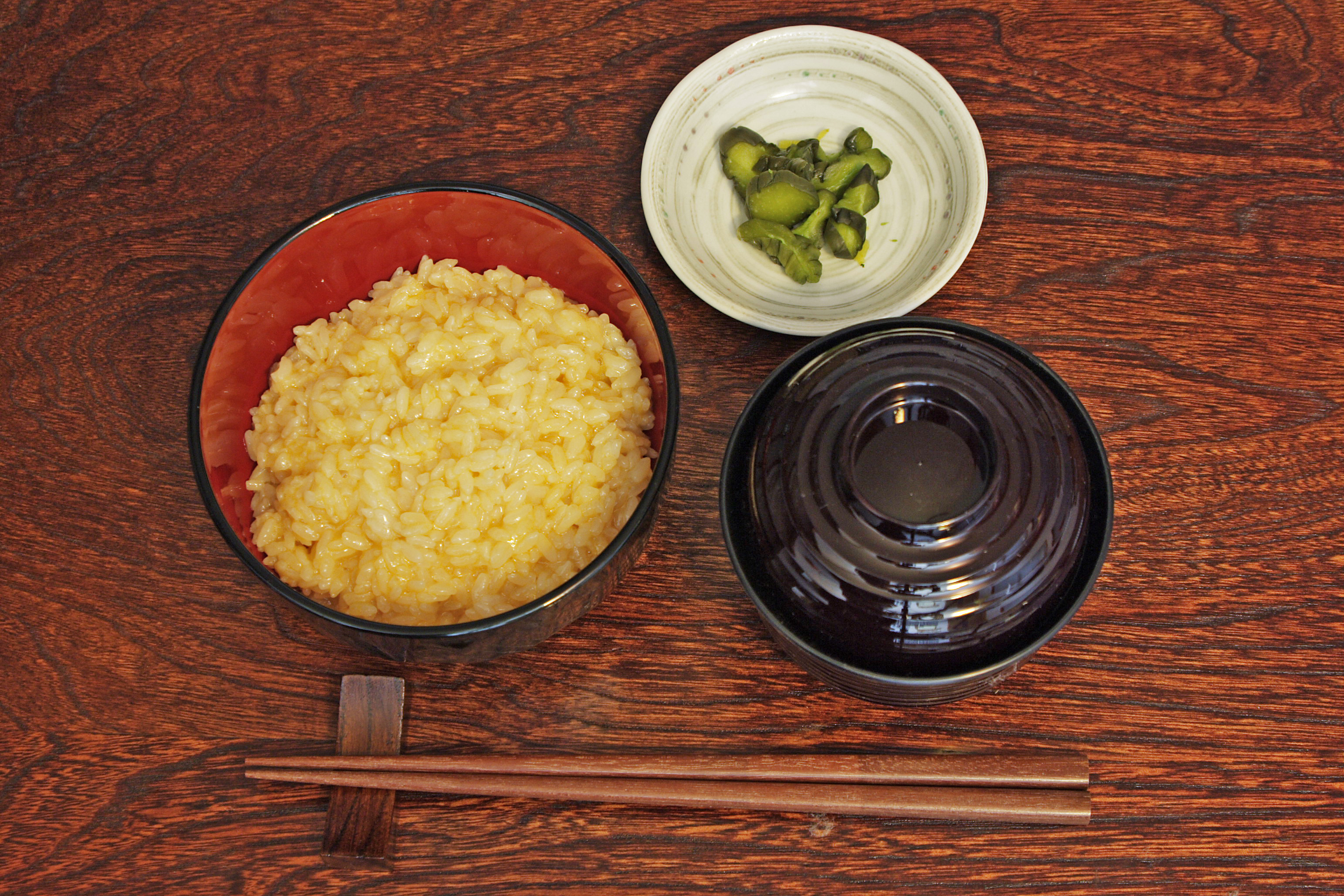
File:Tamagokake-gohan.JPG


Today, Japanese cuisine is still heavily influenced by the four seasons and geography. Seafood and vegetables are most commonly eaten. Whilst to some westerners, the food may seem almost bland, freshness, presentation and balance of flavours is of paramount importance.

Friday, December 4, 2009

Sydney International Food Festival 2010! COMING UP EVENT!


Our beloved Sydney International Food Festival will be back in October 2010 and hopefully, i mean defintely it would be bigger and better!!!!!!!!!!!!!!!
We can confirm that there will be another
Barbecue Madness launch day at the October Sydney Morning Herald Growers' Market (October 2, 2010), a new World Chef Showcase (October 9 and 10) and of course, the Night Noodle Markets (October 11 - 15 and 18 - 22).
And Let's Do Lunch, Let's Do Brunch, Cocktails, Sugar Hit, Hats Off dinners, tours, classes and fabulous community and regional festivals will all be back on the program, along with all the other popular Festival events and many more.
Most part of this event would be held again at The Coopers Beer Garden is the number one destination to relax, eat noodles and enjoy a Coopers ale. The eco-friendly beer garden represented the average Australian backyard, with a focus on sustainable food production and community gardening. It embraced the notion of re-using, recycling and sustainability, all part of the Coopers credo.The garden featured solar panels, a rainwater tank and a Chinese herb garden, plus some clever uses of old woks.

And again, we will be digging our heads into finding more information about any Japanese food events and showcasts in the festival as they have always been fantastic and yummy ^^

Remember to keep an eye on our blog to find out what will be happening this year at the Sydney Internationl Food Festival and for Japanese food lovers out there, please inform use about any informations we have missed, as we do not want to miss out on this major event !!!!!!!!!