Slideshow

Showing posts with label sushi. Show all posts

Friday, January 15, 2010

Make your own sushi!

Hi it's Wesley again!

Since we talked so much about the history, different types of sushi, wht don't we learn to make our own sushi? Yeah? Like this idea? Let's get started!!

So, in order to make a fine japanese sushi roll (or nigiri) you don't need to go through 5 years of fish cutting studies in Japan, neither you need anyone telling you that your first time ever sushi looks more like a sea cucumber in a rush hour out of the water. What you do need is some good will, and of course a good guide to help you through those rough times.

How to make sushi maki

1. "The rough side of the nori"
Feel the nori sheet from both sides and you will find one side to be a bit smooth and the other a little rough. The nori should lay on the rolling mat with the rough side facing upwards.

2."Getting busy with rice"
Get your hands wet, and make about a handful of rice to a ball of rice. It's important to keep your hands wet while working with sushi rice because it is sticky. When you work with the nori though, you should keep them as dry as you can. Keeping a bowl of water and a dry towel in your rolling zone is pretty necessary.

3. "The spread"
Gently put the rice ball in the middle of the nori sheet, and start spreading it equally on the nori, creating a layer of rice covering almost the entire sheet except the upper margin of about 2cm that should be kept uncovered. Later on, that margins are going to be needed empty of rice in order to close to sushi roll properly.

4."Can you fill this?"
Now it's time to place a slice of fish (preferably no more than one) on the edge of the nori, along with 1-3 pre-cut slices of vegetables (carrot, cucumber, green onion, asparagus, and so on.. allow yourself to get wild on this matter)..

5."Commence the rolling sequence"
Using the closer edge of the rolling mat, close on the filling with the nori making a rectangular shaped hill and tighten it from above.

6."continue the rolling sequence"
Move forward, continue rolling in the rectangular hill steps, keeping it tight with every move until you reach the end of the nori. Put pressure on the roll from all three sides at all time, especially on stops to allow it to roll tightly.

7."And....cut!"
Use a wet, sharp knife to cut the roll in to little sushi units. 6-8 units per roll - that's your call.

8."That's it"
Enjoy your japanese sushi roll.


Here's another useful clip for you guys!


What is your favorite type of sushi?


Hey! Do you know how many kind of sushi are there? Which is your favorite type? Well, if you still not sure, keep reading this post!

The common ingredient across all the different kinds of sushi is sushi rice. The variety in sushi arises from the different fillings and toppings, condiments, and the way these ingredients are put together. The same ingredients may be assembled in a traditional or a contemporary way, creating a very different final result. In spelling sushi its first letter s is replaced with z when a prefix is attached, as in nigirizushi, due to consonant mutation called rendaku in Japanese.


Nigirizushi


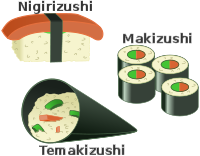
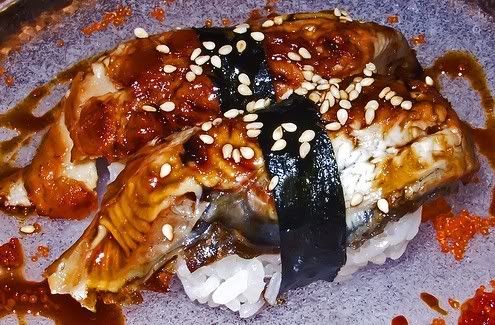
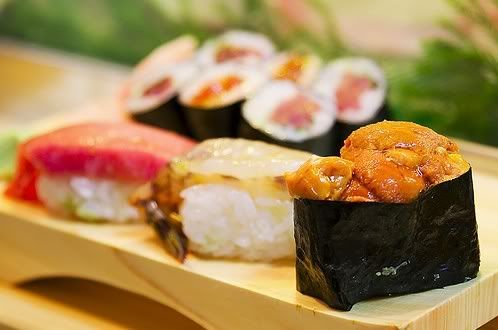
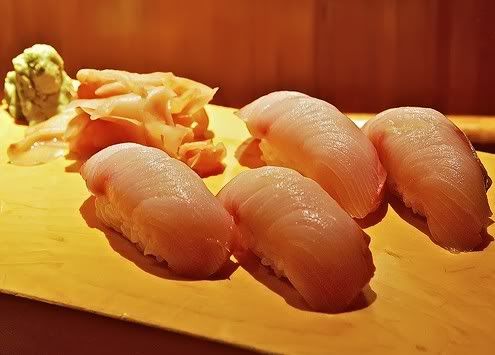
Nigirizushi (握り寿司, lit. hand-formed sushi) consists of an oblong mound of sushi rice that is pressed between the palms of the hands, usually with a bit of wasabi, and a topping draped over it. Toppings are typically fish such as salmon, tuna or other seafood. Certain toppings are typically bound to the rice with a thin strip of nori, most commonly tako (octopus), unagi (freshwater eel), anago (sea eel), ika (squid), and tamago (sweet egg). When ordered separately, nigiri is generally served in pairs. A sushi set may contain only one piece of each topping.

Gunkanmaki (軍艦巻, lit. warship roll) is a special type of nigirizushi: an oval, hand-formed clump of sushi rice that has a strip of "nori" wrapped around its perimeter to form a vessel that is filled with some soft, loose or fine-chopped ingredient that requires the confinement of nori such as roe, natto, oysters, sea urchin, corn with mayonnaise, and quail eggs.Gunkan-maki was invented at the Ginza Kyubey restaurant in 1931; its invention significantly expanded the repertoire of soft toppings used in sushi.

Temarizushi (手まり寿司, lit. ball sushi) is a ball-shaped sushi made by pressing rice and fish into a ball-shaped form by hand using a plastic wrap. They are quite easy to make and thus a good starting point for beginners.


Makizushi or Makimono

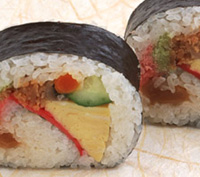
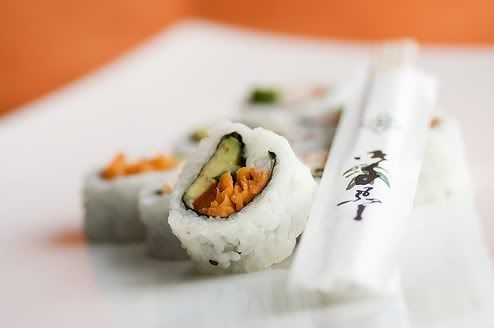
Inari-zushiMakizushi (巻寿司, lit. rolled sushi) or makimono (巻物, lit. variety of rolls) is cylindrical piece, formed with the help of a bamboo mat, called a makisu (巻簾). Makizushi is generally wrapped in nori, but can occasionally be found wrapped in a thin omelette, soy paper, cucumber, or parsley. Makizushi is usually cut into six or eight pieces, which constitutes a single roll order. Below are some common types of makizushi, but many other kinds exist.

Also, there are Futomaki (太巻, lit. thick, large or fat rolls, a large cylindrical piece, with nori on the outside) Hosomaki (細巻, lit. thin rolls, a small cylindrical piece, with the nori on the outside) Temaki (手巻, lit. hand rolls, a large cone-shaped piece of nori on the outside and the ingredients spilling out the wide end) and Uramaki (裏巻, lit. inside-out rolls, a medium-sized cylindrical piece, with two or more fillings).


Others

Oshizushi (押し寿司, lit. pressed sushi), is a pressed sushi from the Kansai Region, a favourite and specialty of Osaka. Inari-zushi (稲荷寿司, stuffed sushi) is a pouch of fried tofu filled with usually just sushi rice. Sukeroku (助六, name of a man in Edo period) is the combination set of inarizushi and makizushi, which is served as a single-portion takeout style sushi-pack. Nama-chirashi, or chirashizushi with raw ingredientsChirashizushi (ちらし寿司, lit. scattered sushi) is a bowl of sushi rice with other ingredients mixed in (also refers to barazushi). Narezushi (熟れ寿司, lit. matured sushi) is a traditional form of fermented sushi. Skinned and gutted fish are stuffed with salt, placed in a wooden barrel, doused with salt again, then weighed down with a heavy tsukemonoishi (pickling stone). As days pass, water seeps out and is removed. After six months this funazushi can be eaten, remaining edible for another six months or more.


The History of SUSHI !!


Hi there! Long time no blog! Today I was thinking having sushi for my lunch, and this idea just popped up in my head, where does sushi come from? Who made the first sushi ever? Well, then I did some resaerch on the internet, and hope these information I shared can help everyone know a little bit more about the history of sushi.

Sushi (寿司, 鮨, or 鮓) is vinegar rice, topped with other ingredients, such as fish. Sliced raw fish alone is called sashimi, as distinct from sushi. Sushi served rolled inside or around dried and pressed layer sheets of seaweed (or nori) is makizushi (巻き). Toppings stuffed into a small pouch of fried tofu is inarizushi. Toppings served scattered over a bowl of sushi rice is called chirashi-zushi (ちらし).

The original type of sushi, classified today as nare-sushi, first developed somewhere in Southeast Asia, disseminating to Japan. Fish was salted and wrapped in fermented rice, a traditional lacto-fermented rice dish. Nare-sushi was made of this gutted fish stored in fermented rice for preservation. Nare-sushi was stored for fermentation for a few months then removed. The fermented rice was discarded and fish was the only part consumed. This early sushi became a great source of protein.
The Japanese preferred to eat the fish with the rice, called seisei-sushi. During the Muromachi period seisei-sushi was the most popular type of sushi. Seisei-sushi was partly raw fish wrapped in rice, consumed fresh, before it lost its flavor. This new way of consuming fish was no longer a form of preservation but rather a new dish in Japanese cuisine.

During the Edo era (the early modern period, 1603 to 1868 in Japan), a third type of sushi was introduced, haya-sushi. Haya-sushi was assembled so that both rice and fish could be consumed at the same time, and the dish became unique to the Japanese culture. It was the first time that rice was not being used for fermentation. Rice was now mixed with vinegar. Fish, vegetables and dried preserved foods would be added. This type of sushi is still very popular today. Each region utilizes local flavors to produce a variety of sushi that has been passed down for many generations.

When Tokyo was still being called Edo, at the beginning of the 19th century, mobile food stalls became the dominant food service. During this period nigiri-sushi was introduced. Nigiri-sushi is the most common type of sushi in the modern sushi restaurants. It is an oblong mound of rice with a slice of fish draped over it. After the Great Kanto earthquake in 1923, nigiri-sushi chefs lost their jobs and spread throughout Japan and popularised the dish throughout the country.

Today the sushi dish is internationally known as "sushi" (nigirizushi; Kantō variety) is a fast food invented by Hanaya Yohei (華屋与兵衛; 1799 - 1858) at the end of Edo period in today's Tokyo (Edo). People in Tokyo were living in haste even a hundred years ago. The nigirizushi invented by Hanaya was not fermented and could be eaten using the fingers or chopsticks. It was an early form of fast food that could be eaten at a road side or in the theater.


OK! Time to have sushi now!

Friday, December 11, 2009

Japanese-style Rice Dishes

Hello everyone, today Nicole is going to introduce various kinds of Japanese rice dishes~

Firstly, i'd like to recommend a brand of raw Japanese sushi rice--- SunRice Japaneses Style Sushi Rice. As a sushi lover, I have to say that, rice choosing is the most basic yet important thing that you have to pay much attention on it.


SunRice Japanese Style Sushi Rice is a soft and tender short grain rice ideally steamed to accompany Japanese meals. When cooked it is clingy enough to be eaten with chopsticks. It is perfect for sushi, and is also great for rice desserts. Often mistakenly referred to as "sticky rice" which is not true. Sticky rice is a glutinous rice used mainly for desserts. For best results, rinse 3-4 times before cooking and do not cook with salt, to preserve the delicate flavour. SunRice Japanese Style Sushi Rice is available in 750g packs and you can find it in any Japanese/ Chinese/ Korean convenient supermarkets.
______________________________________________

NOW, here are some SPECIAL Japanese dishes based on rice.. I know you will love them! ^o^

______________________________________________


  • Japanese-style plain Rice


Properly cooked rice is the foundation of a traditional Japanese meal, and you absolutely cannot skimp on the steps detailed here if you are aiming for anything approaching authenticity.

Rice is the staple of Japanese food, and making it just right can be rather difficult if you don't know how. If you think you will be preparing rice regularly, an electric rice cooker will make your life so much easier.

Japanese rice is a very particular variety. For traditional Japanese dishes you simply cannot substitute long-grain rice, jasmine rice, basmati rice, Carolina type rice, and so on. I sometimes hear people saying things like "But I can make onigiri with jasmine rice just fine, as long as I cook it so it's mushy and the grains stick together". No no no no no. A good onigiri, a good sushi roll, a good nigiri-zushi, and most of all a good bowl of rice does not have mushy rice.

Ideally, the rice should be quite fresh. The best rice is new rice called shinmai, purchased within 3 months of harvest. Unfortunately, it's just about impossible to buy rice that fresh outside of Japan. Just buy the best rice you can afford, such as the SunRice Japaneses Style Sushi Rice. Once you learn how to make rice properly, you will really taste the difference between different kinds of rice.

Some popular 'first grade' Japanese rice varieties include Sasanishiki, Koshihikari andAkita Komachi. They tend to be expensive.

______________________________________________


  • Smoked Salmon Temari Zushi

This is another type of sushi which is great for parties. Temari are small cloth balls made from leftover scraps of kimono fabric, and temari zushi are meant to look like these colorful toys. You can make temari zushi with any number of things, such as thinly sliced sashimi grade fish, boiled and butterflied shrimp, thinly sliced and cooked or uncooked vegetables, and even thin slices of cheese. It is made by thinly cut slices of pale pink smoked salmon and tiny amount of cream cheese inside. It seems quite non-traditional but it’s a great combination. The key is to make the temari zushi on the small side since they are quite rich.
As with the hamaguri-zushi, these don’t require any soy sauce for dipping.


_____________________________________________


  • Shell-shaped sushi (Hamaguri-zushi)


As be shown, the first is hamaguri-zushi or clam sushi is supposed to look like a clam, but to me it looks just as much like a little yellow flower. It can be filled with any kind of sushi rice and, with lemony smoked salmon, mitsuba or flat-leaf parsley and white sesame seeds, wrapping in a usuyaki tamago or thin omelette. It’s related to chakin-zushi, where the omelette is wrapped in a bag shape and tied, but slightly less fiddly since all you have to do is fold it into quarters.
Besides making a very pretty spring party dish (for an appetizer maybe, or as part of a buffet), these work very well as bento items too since the sushi rice has good keeping qualities, and the omelette keeps the rice from drying out. Plus you can just grab them with your hands to eat.


______________________________________________


  • Kurama Mixed Rice
Kurama Mixed Rice is an amazing Japanese rice dish mixed with soy sauce-infused chirimen jako (dried, salted, tiny fish, a fantastic ingredient we'll get to in a minute) and sansho (intensely aromatic, seductive accent, ditto about getting into in a minute). In addition, chirimen jako are tiny young sardines or anchovies that have been boiled then salted and dried, thus naturally preserved. You reconstitute them with boiling water and add to an omelet or quickly deep fry and sprinkle over salad or, well, rice.


______________________________________________

  • Chestnut Rice


Chestnut rice is another incredible Japanese style rice with a play of delicate flavors. You steam the chestnuts with rice, brings out their natural sweetness in a much more subtle. The rice is a mixture of Japanese short grain rice and sticky (glutinous or sweet) rice, which creates a delightful texture and infuses even more of that natural sweetness. Finally, the sake and the salt here nicely pop all these tastes. The complexity of flavor you find in this simple dish is just amazing.


YOU HAVE TO TRY THEM!!!

In addition, both Kurama Mixed Rice and Chestnut Rice are selected from the blog The Japanese Food Report, it introduces lots of delicious Japanese special dishes and provides recipes, come and vist it!!