
Hi there! Long time no blog! Today I was thinking having sushi for my lunch, and this idea just popped up in my head, where does sushi come from? Who made the first sushi ever? Well, then I did some resaerch on the internet, and hope these information I shared can help everyone know a little bit more about the history of sushi.
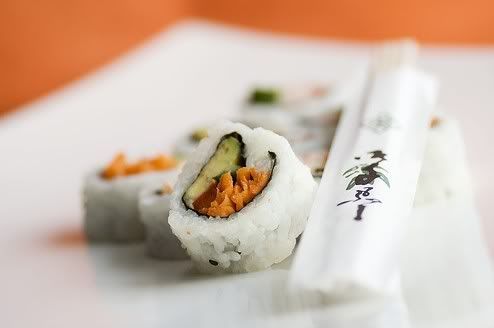
Sushi (寿司, 鮨, or 鮓) is vinegar rice, topped with other ingredients, such as fish. Sliced raw fish alone is called sashimi, as distinct from sushi. Sushi served rolled inside or around dried and pressed layer sheets of seaweed (or nori) is makizushi (巻き). Toppings stuffed into a small pouch of fried tofu is inarizushi. Toppings served scattered over a bowl of sushi rice is called chirashi-zushi (ちらし).
 The original type of sushi, classified today as nare-sushi, first developed somewhere in Southeast Asia, disseminating to Japan. Fish was salted and wrapped in fermented rice, a traditional lacto-fermented rice dish. Nare-sushi was made of this gutted fish stored in fermented rice for preservation. Nare-sushi was stored for fermentation for a few months then removed. The fermented rice was discarded and fish was the only part consumed. This early sushi became a great source of protein.
The Japanese preferred to eat the fish with the rice, called seisei-sushi. During the Muromachi period seisei-sushi was the most popular type of sushi. Seisei-sushi was partly raw fish wrapped in rice, consumed fresh, before it lost its flavor. This new way of consuming fish was no longer a form of preservation but rather a new dish in Japanese cuisine.
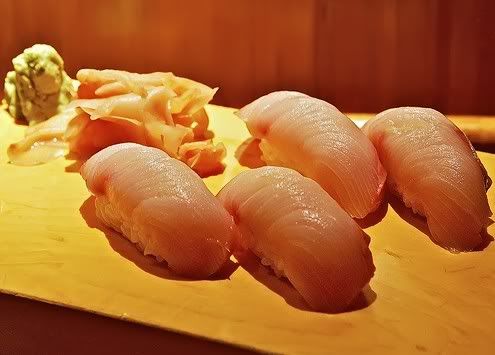 During the Edo era (the early modern period, 1603 to 1868 in Japan), a third type of sushi was introduced, haya-sushi. Haya-sushi was assembled so that both rice and fish could be consumed at the same time, and the dish became unique to the Japanese culture. It was the first time that rice was not being used for fermentation. Rice was now mixed with vinegar. Fish, vegetables and dried preserved foods would be added. This type of sushi is still very popular today. Each region utilizes local flavors to produce a variety of sushi that has been passed down for many generations.
Today the sushi dish is internationally known as "sushi" (nigirizushi; Kantō variety) is a fast food invented by Hanaya Yohei (華屋与兵衛; 1799 - 1858) at the end of Edo period in today's Tokyo (Edo). People in Tokyo were living in haste even a hundred years ago. The nigirizushi invented by Hanaya was not fermented and could be eaten using the fingers or chopsticks. It was an early form of fast food that could be eaten at a road side or in the theater.

OK! Time to have sushi now!


 Posts
Posts

